Most people who have sleep apnea don’t realize how long it’s been going on. There’s no dramatic moment, no obvious warning. Instead, years pass, and your body quietly absorbs the damage of hundreds of breathing interruptions per night, each one triggering a small stress response, each one pulling the heart a little harder, each one shaving time off of deep sleep. By the time a partner mentions the snoring or a doctor orders a sleep study, the condition has often been present for a decade or more.
At Smile Solutions in Aberdeen, South Dakota, Dr. Amy Scepaniak and Dr. Aleaha Fettig Ledeboer screen patients for sleep apnea as part of their comprehensive approach to whole-body wellness. Dr. Scepaniak is a member of the American Sleep and Breathing Academy, and both doctors have completed training through the Dawson Academy. Our sleep solutions program offers oral appliance therapy as a comfortable, portable alternative for patients who have been diagnosed but struggle with CPAP.
What’s Actually Happening During a Sleep Apnea Event?
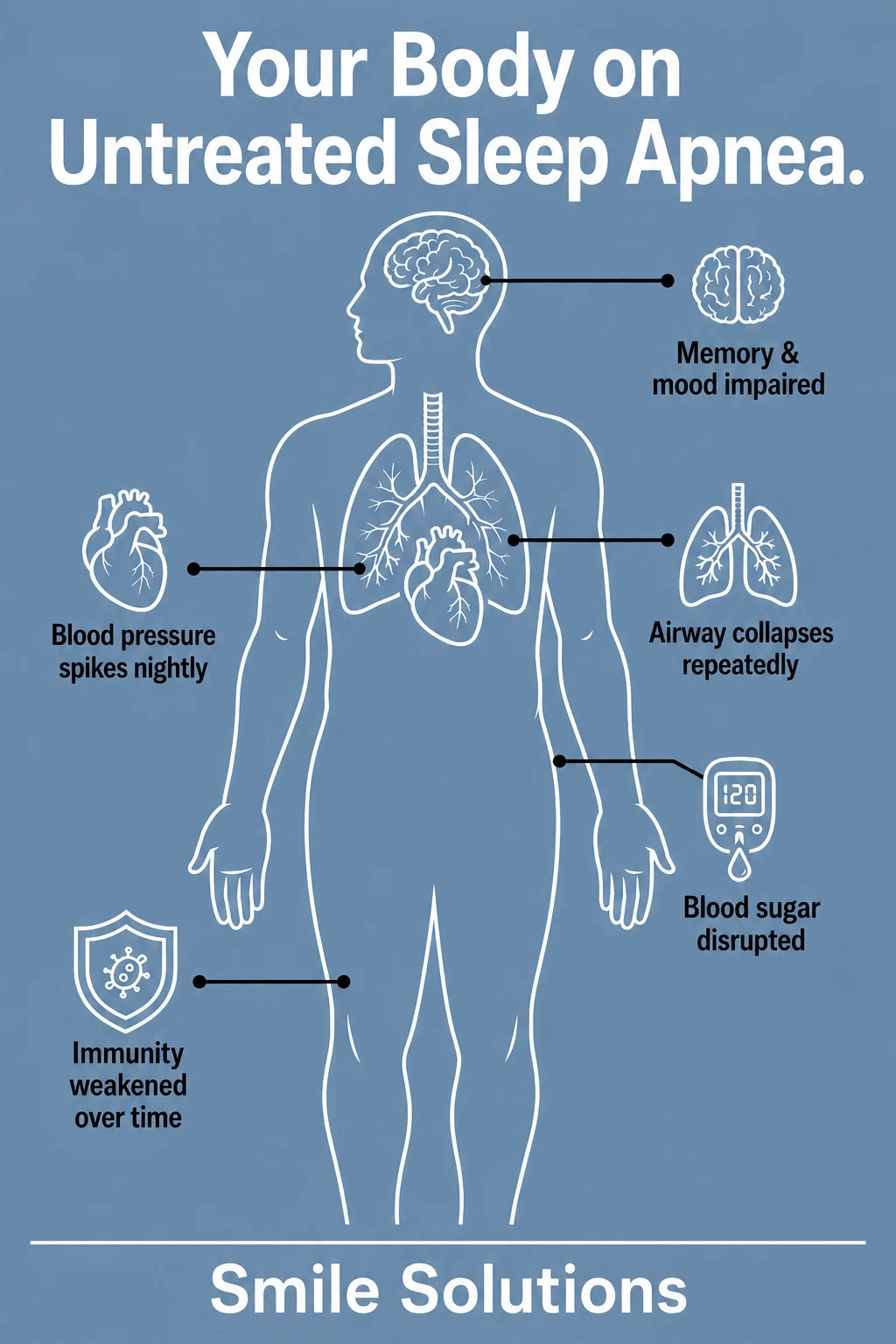
Every time breathing stops during sleep, blood oxygen levels dip. The brain detects the drop and sends an alert, briefly rousing the body just enough to restart airflow. This happens silently, often without the person ever fully waking up. The problem is that it may happen dozens or even hundreds of times per night, and each event is physiologically similar to a minor stressor. The sympathetic nervous system fires, blood pressure spikes briefly, and the heart works harder than it should during sleep. Over months and years, that repeated strain adds up.
Cardiovascular Risk Builds Quietly
Research from the American Heart Association has found that obstructive sleep apnea raises the risk of high blood pressure, coronary artery disease, and stroke, and that its prevalence reaches between 40% and 80% in patients already living with heart failure or atrial fibrillation. That’s not a coincidence. Each apnea event causes a small but measurable increase in sympathetic nervous activity, and the cumulative cardiovascular burden over years without treatment is significant.
Cognitive and Mood Changes Happen Gradually
The same oxygen disruption that stresses the heart affects the brain. Research published in the journal Sleep found that adults with severe, untreated sleep apnea showed measurable reductions in white matter integrity across multiple brain regions, along with associated impairments in cognition, mood, and daytime alertness. Patients often chalk these changes up to getting older, a busy life, or stress, because they develop so gradually that there’s no single moment when something feels obviously wrong.
The Risk Nobody Talks About in Kids
One of the most underappreciated risks of untreated sleep apnea involves children, and it’s something both Dr. Scepaniak and Dr. Fettig Ledeboer discuss with families regularly in their Aberdeen practice. A five-year study published in the journal SLEEP, drawing from the Tucson Children’s Assessment of Sleep Apnea Study, found that children with persistent sleep apnea were six times more likely to have parent-reported behavioral problems, seven times more likely to have reported learning problems, and three times more likely to earn grades of C or lower, compared to children who never had sleep-disordered breathing.
What makes this particularly challenging is that the behavioral symptoms, including hyperactivity, inattention, and difficulty with emotional regulation, look almost identical to ADHD. Many children in these situations are assessed for neurodevelopmental disorders before anyone considers whether disrupted sleep is driving the symptoms. Screening early, before those patterns become entrenched, can significantly change your trajectory.
Other Body Systems That Pay a Price
Sleep apnea’s reach extends beyond the heart and brain. The list of systems affected when breathing repeatedly stops and restarts is longer than most patients expect when they first come in asking about snoring.
The following conditions are associated with untreated sleep apnea:
- Type 2 diabetes and metabolic dysfunction, due to disrupted glucose regulation during interrupted sleep
- Worsened gastroesophageal reflux from increased pressure changes in the chest cavity
- Reduced immune resilience from chronic sleep fragmentation
- Depression and anxiety, which are both more prevalent in adults with untreated OSA
- Increased risk of motor vehicle accidents from daytime sleepiness and slowed reaction time
The body’s systems don’t operate in isolation, and chronic oxygen disruption during sleep touches nearly all of them over time.
Why Oral Appliance Therapy Makes Treatment Easier to Sustain
Treatment compliance is one of the biggest challenges in sleep apnea care. CPAP therapy is highly effective, but many patients struggle with the mask, noise, humidity requirements, and equipment when traveling. Our team offers oral appliance therapy as an alternative for patients who have been diagnosed with sleep apnea and are looking for something more manageable day-to-day. The appliance is small, fits in a travel bag, requires no distilled water, and works by gently repositioning the jaw to keep the airway open during sleep.
Patients who were not consistently using their CPAP often find that compliance improves when they switch. We also offer Perio Laser Therapy, which can address soft tissue concerns that contribute to airway restriction.
Smile Solutions Is Ready to Help You Get Answers
Dr. Scepaniak and Dr. Fettig Ledeboer have built a practice grounded in whole-family, relationship-based care. They are both Dawson Academy-certified and members of the American Academy of Clear Aligners, and Dr. Scepaniak’s membership in the American Sleep and Breathing Academy reflects a commitment to staying current in this area of care. For patients traveling from across northeastern South Dakota and into North Dakota, the oral appliance pathway offers a way to start treatment without the barriers that have kept many people on the sidelines.
If you’ve been told you snore, if you’re waking up tired regardless of how long you sleep, or if your child is struggling in school or with behavior in ways that haven’t had a clear answer, sleep may be worth exploring. Reach out through our contact form to start the conversation.