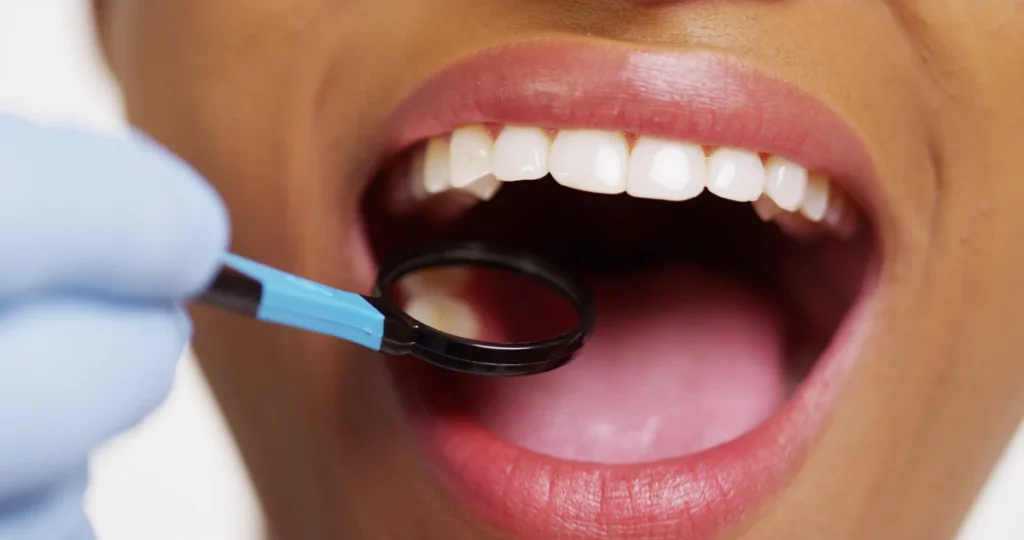
A little redness on your toothbrush after brushing rarely feels like an emergency, so most people wipe it off and go about their morning. That small habit of looking past minor gum changes is exactly how gum disease gets its foothold. It tends to start quietly, without much pain, which is why so many people don’t notice anything is wrong until the problem has already progressed further than they realized.
Our team at Smile Solutions sees this pattern often: patients who assumed mild gum tenderness or occasional bleeding was nothing more than brushing too hard. As part of our general and preventive dental services, we check gum health closely at every visit, because the earliest warning signs are usually easy to miss on your own. Knowing what those signs look like puts you in a much better position to catch gum disease while it is still simple to treat.
What Early Gum Disease Actually Looks Like
Gum disease usually begins as gingivitis, a mild form of inflammation caused by plaque buildup along the gumline. In this early stage, gums may look slightly redder than usual, feel a bit puffy, or bleed when you brush or floss. These changes happen because the tissue is reacting to bacteria, not because anything has broken down structurally yet, which is part of why gingivitis is so easy to overlook.
The encouraging part is that gingivitis is fully reversible with better home care and professional cleanings. According to the Centers for Disease Control and Prevention, nearly half of adults thirty and older have some form of periodontitis, the more advanced stage of gum disease that develops when gingivitis is left untreated. Catching the milder signs early is what keeps a simple case of gingivitis from turning into something that requires more involved care.
Subtle Signs You Might Be Brushing Off
Some signs of early gum disease are easy to dismiss because they don’t hurt or seem serious enough to mention at your next appointment. Paying closer attention to smaller changes in your mouth can make a real difference in how quickly a problem gets addressed.
A few subtle signs worth watching for include the following.
- Gums that bleed occasionally during brushing or flossing, even without added pressure
- Persistent bad breath that doesn’t go away after brushing
- Gums that look slightly swollen, shiny, or a deeper red than the surrounding tissue
- Mild tenderness or sensitivity when eating something hot or cold
- Gums that appear to be pulling back slightly from the teeth
If any of these sound familiar, a visit for routine cleanings and checkups is a good next step, since professional cleanings remove the plaque and tartar buildup that home brushing cannot fully reach on its own.
Why Catching It Early Really Matters
Left untreated, gingivitis can advance into periodontitis, a more serious condition that affects the bone and tissue supporting your teeth. At this stage, treatment becomes more involved, and damage to the supporting structures generally cannot be reversed, only managed. Periodontitis is also a leading cause of adult tooth loss, which can eventually lead to needing restorative options like dental bridges to replace missing teeth.
For patients who need a more targeted approach to gum health, we also offer perio laser therapy, a soft tissue treatment that can address certain gum concerns with less discomfort than older methods. This kind of option matters most for patients whose gum disease has progressed beyond what home care alone can manage, since a laser-based approach can often reach areas that are harder to treat with traditional tools. Between regular exams, cleanings, and access to more advanced treatment when it is needed, addressing gum changes early tends to be far simpler, and often far less costly, than treating them once they have progressed.
Schedule a Gum Health Check at Smile Solutions
Smile Solutions has cared for the Aberdeen community for more than fifteen years, dating back to 2009, and our doctors, Dr. Amy Scepaniak and Dr. Aleaha Fettig Ledeboer, bring a shared focus on preventive care alongside general, cosmetic, and restorative dentistry. We use digital radiography and same-day crown technology to support treatment plans at every stage of gum health, from the first sign of redness to more advanced restorative needs.
If you have noticed any of the changes described above, or it has simply been a while since your last cleaning, we encourage you to contact our office to schedule a visit. A quick check now is a lot easier than addressing a bigger problem later, and our team is happy to walk you through what we see and what steps, if any, make sense for your smile.