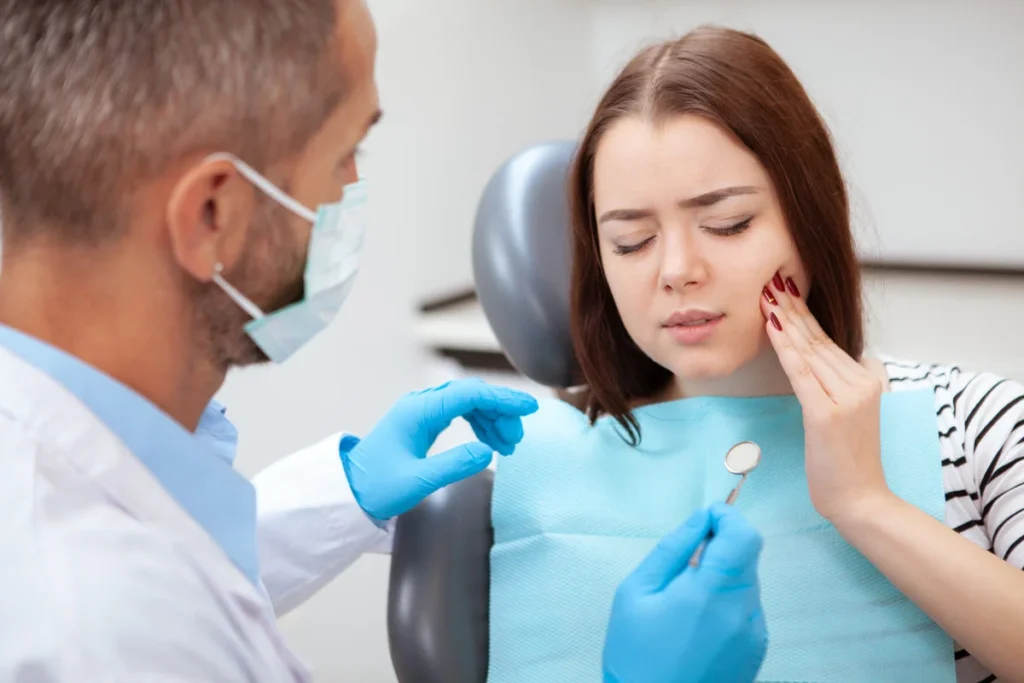
TMJ/TMD Treatment in Aberdeen, SD
Jaw pain that flares every time you chew, a persistent clicking sound when you open your mouth wide, or morning headaches that seem to come out of nowhere can slowly reshape your daily life. These symptoms most often get dismissed as stress or bad posture, but they frequently point to a treatable condition affecting the temporomandibular joint, the hinge connecting your jawbone to your skull.
At Smile Solutions, we help patients throughout Aberdeen and the surrounding region understand what is actually happening with their jaw and how to find relief. Temporomandibular joint disorder, commonly shortened to TMJ or TMD, is one of several restorative dentistry services we provide, and identifying it early often prevents the discomfort from becoming a long-term problem.
What Causes TMJ/TMD Discomfort?
TMD develops when the joint itself, the surrounding muscles, or the disc that cushions jaw movement stop functioning smoothly together. Some patients trace their symptoms back to a jaw injury or years of teeth grinding, while others notice the disorder emerging gradually with no clear starting point.
Common contributing factors include clenching or grinding during sleep, jaw misalignment, arthritis in the joint, and chronic muscle tension. Since the jaw is involved in nearly every part of daily life, from talking to eating to yawning, even mild dysfunction tends to become obvious quickly. Patients often describe a dull ache near the ear, tenderness along the jawline, or a sensation of the jaw locking or catching mid-motion.
Recognizing the Signs of TMJ/TMD
The symptoms of TMD vary from person to person, which is part of why the condition is so often overlooked or misattributed to something else. Some patients experience sharp pain with jaw movement, while others notice a persistent, low-level ache that worsens throughout the day.
Signs worth mentioning at your next visit include:
- Jaw pain or tenderness
- Clicking or popping when opening or closing your mouth
- Difficulty chewing
- A jaw that feels stuck or locked
- Facial pain that radiates toward the ears or temples
- Frequent headaches, particularly upon waking
Patients who already work with us for same-day crowns or other restorative work sometimes mention these symptoms during routine visits, which is often when a TMD pattern first becomes clear.
The Sleep Connection Worth Understanding
One of the more overlooked aspects of TMJ/TMD is how closely it can relate to sleep quality, and specifically to obstructive sleep apnea. A 2022 systematic review published by the Korean Association of Oral and Maxillofacial Surgeons and hosted through the National Institutes of Health examined multiple studies on this relationship and found that patients with obstructive sleep apnea consistently showed a higher prevalence of TMD signs and symptoms compared to healthy controls, with one cross-sectional study finding just over half of consecutive OSA patients presented TMD symptoms versus roughly a third of controls. Researchers have proposed that disrupted, fragmented sleep and the resulting strain on the body may contribute to heightened jaw pain sensitivity over time.
This connection is significant because jaw clenching and grinding during sleep, which are both closely linked to airway obstruction, place ongoing stress on the jaw joint throughout the night. Patients who already work with us on sleep solutions for snoring or sleep apnea sometimes find that addressing their airway also brings noticeable relief to jaw discomfort, since the two conditions frequently reinforce each other.
What Treatment Looks Like
Every TMD case looks a little different, which is why we start with a thorough evaluation of jaw movement, joint sounds, and muscle tenderness before recommending a course of action. For many patients, a custom oral appliance worn at night is the most effective way to reduce clenching pressure and let the joint rest.
Other approaches include:
- Custom nightguards designed to reduce nighttime clenching and grinding
- Bite adjustment to correct alignment issues placing uneven pressure on the joint
- Jaw exercises and stretches to improve range of motion and reduce muscle tension
- Warm compresses and at-home care guidance to manage flare-ups between visits
We thoroughly discuss each option with you so you understand why a particular strategy fits your specific symptoms, rather than defaulting to a single generic solution for every patient.
Why Aberdeen Patients Trust Our Approach
Dr. Amy Scepaniak and Dr. Aleaha Fettig Ledeboer built Smile Solutions in 2009 around the idea that patients deserve providers who genuinely listen before recommending treatment, and that philosophy carries directly into how we approach TMD. Rather than treating jaw pain as an isolated complaint, we look at the fuller picture of a patient’s oral health and sleep patterns to identify what is actually driving the discomfort.
As a locally owned, non-DSO dental practice in Aberdeen, our team has the flexibility to spend real time with patients working through a condition that can otherwise feel confusing or dismissed elsewhere. If jaw pain, clicking, or persistent headaches have become part of your routine, contact our office to schedule an evaluation and let us help you find the path to relief.
It's your turn,
come visit us!
See the difference for yourself. Call (605)
725-1500 or request an appointment online
to set up your first visit.