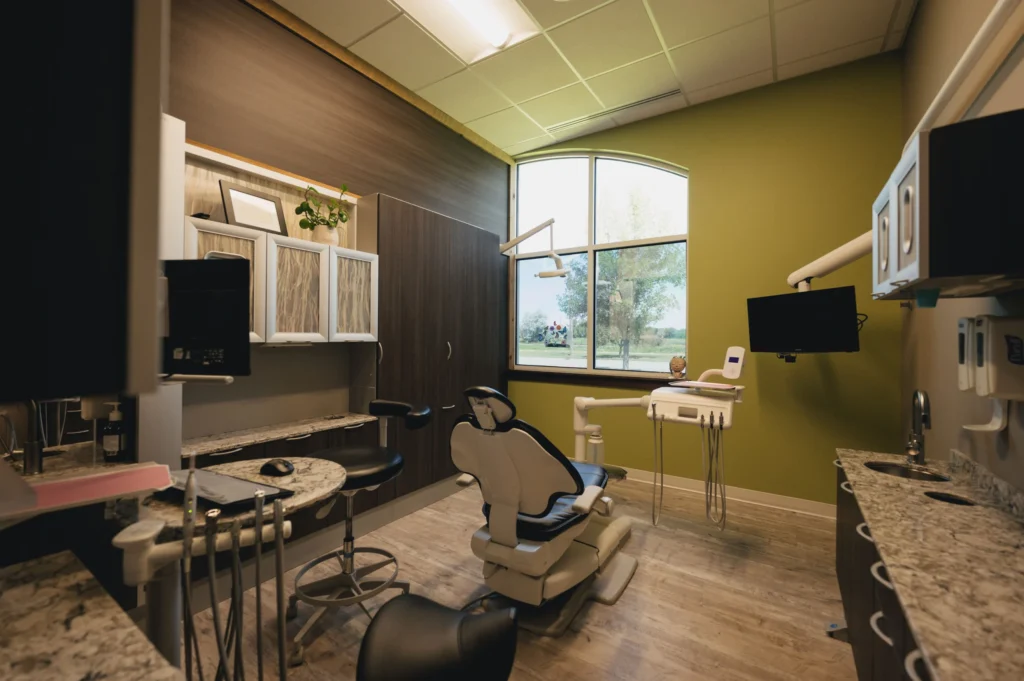
Dental Sealants in Aberdeen, SD
Cavities in the back teeth are one of the most common problems we see in kids and teens, often forming in grooves a toothbrush cannot reach. Dental sealants protect those deep pits and fissures by sealing off the chewing surfaces of the molars before decay has a chance to start.
At Smile Solutions, we recommend sealants as a standard part of preventive care for our family dentistry patients, because about 9 in 10 cavities in children occur in the back teeth. With a high volume of young patients and no pediatric dental specialist based in Aberdeen, we want families across Brown County to know exactly how this simple, protective step works.
How Dental Sealants Protect Teeth
A dental sealant is a thin, tooth-colored coating applied directly to the chewing surface of a back tooth. Once it is painted on, the material flows into the natural grooves of the molar and hardens quickly, forming a smooth barrier over the areas that are hardest to keep clean.
That barrier keeps food particles, bacteria, and plaque from settling into the deep grooves where a toothbrush bristle cannot always reach. This matters most for children and teens, because regular brushing and flossing habits are still being established. According to the CDC, sealants can prevent up to 80% of cavities for two years and continue protecting against 50% of cavities for up to four years when applied at the right time.
Sealants are not a replacement for daily brushing and flossing, but they do add a significant extra layer of defense in the spots where brushing alone tends to fall short. Many parents are surprised to learn that a molar can develop a cavity even when a child brushes regularly, simply because the bristles cannot fully clean out the deepest grooves. Sealants solve that specific problem without changing anything else about a child’s daily routine.
Why Timing Matters for Sealants
Sealants work best when they are placed soon after a new molar comes in, before decay has any opportunity to develop. First molars typically erupt around age 6, and second molars usually follow around age 12, which makes both ages a good checkpoint for evaluating whether sealants make sense.
We look at each patient’s groove pattern, brushing habits, and cavity risk during routine dental exams and teeth cleanings to determine the right time to apply sealants. Because the application process is quick and does not require any numbing or drilling, most patients are back to eating and drinking normally within minutes. We also pair sealants with other preventive tools, including fluoride treatments, to give newly erupted teeth the strongest possible defense against decay.
Adults can benefit from sealants as well, particularly if a molar has deep grooves that have stayed cavity-free so far. While sealants are most common in younger patients, we evaluate candidacy at any age during a standard exam rather than assuming they are just for kids. If you or a family member has a history of cavities in the back teeth, ask about sealants at your next visit, regardless of age.
What to Expect During a Sealant Appointment
Sealants are one of the easiest preventive treatments we offer, and most patients find the process quick and comfortable. Here is what typically happens during a visit:
- We clean and dry the tooth thoroughly to prepare the surface for the sealant material.
- The sealant is painted directly into the grooves of the molar.
- A curing light is used to harden the sealant.
Once the sealant has hardened, the tooth is protected and ready for normal use right away. There is no downtime, no soreness, and no adjustment period, which makes sealants an easy addition to a child’s existing dental visit rather than a separate appointment to plan around.
Many dental insurance plans, including Delta Dental, help cover the cost of sealants, and we also offer financing through CareCredit and Sunbit for families who want additional flexibility. We use digital radiography and 3D imaging to get a clear, detailed look at each tooth before recommending sealants, which helps us confirm that a molar’s grooves are actually at risk before moving forward with treatment. That same technology also lets us catch early signs of decay that sealants alone would not address, so nothing gets missed during a routine visit.
Sealants vs. Fluoride vs. Fillings
These three treatments work together, but each one does a different job at a different stage.
| Treatment | What it does | When it fits |
|---|---|---|
| Dental sealants | Covers the grooves of back teeth with a protective barrier | Before decay starts, soon after molars come in |
| Fluoride treatments | Strengthens enamel on all tooth surfaces | At routine visits, for children and adults |
| Dental fillings | Repairs a tooth after a cavity has formed | When decay is already present |
Preventing a cavity is almost always simpler than repairing one, which is why we look at sealants and dental fillings as two ends of the same plan. Sealants can wear over time, so they are worth checking at routine exams.
Schedule Sealants at Smile Solutions
Dr. Amy Scepaniak and Dr. Aleaha Fettig Ledeboer have built Smile Solutions around the simple idea that families in Aberdeen deserve consistent, caring dental care from providers who are actually part of this community. Smile Solutions opened in 2009, and with no pediatric dental specialist based in Aberdeen, we see a large number of children and teens through our pediatric dentistry services who benefit from preventive treatments like sealants alongside routine cleanings and checkups.
Our team draws on more than 18 years of experience serving Aberdeen and the surrounding communities, and we use the same modern technology, including same-day crowns and 3D imaging, across every age group we treat. If your child has new molars coming in or you want to know whether sealants are a good fit for your family, our team is ready to help you figure out the best next step. You can schedule your visit online to get started.
Dental Sealant FAQs
How long do dental sealants last?
What age should my child get sealants?
Does getting sealants hurt?
Do adults need sealants?
Does insurance cover sealants?
Will my child still need to brush and floss with sealants?
Are dental sealants safe?
It's your turn,
come visit us!
See the difference for yourself. Call (605)
725-1500 or request an appointment online
to set up your first visit.